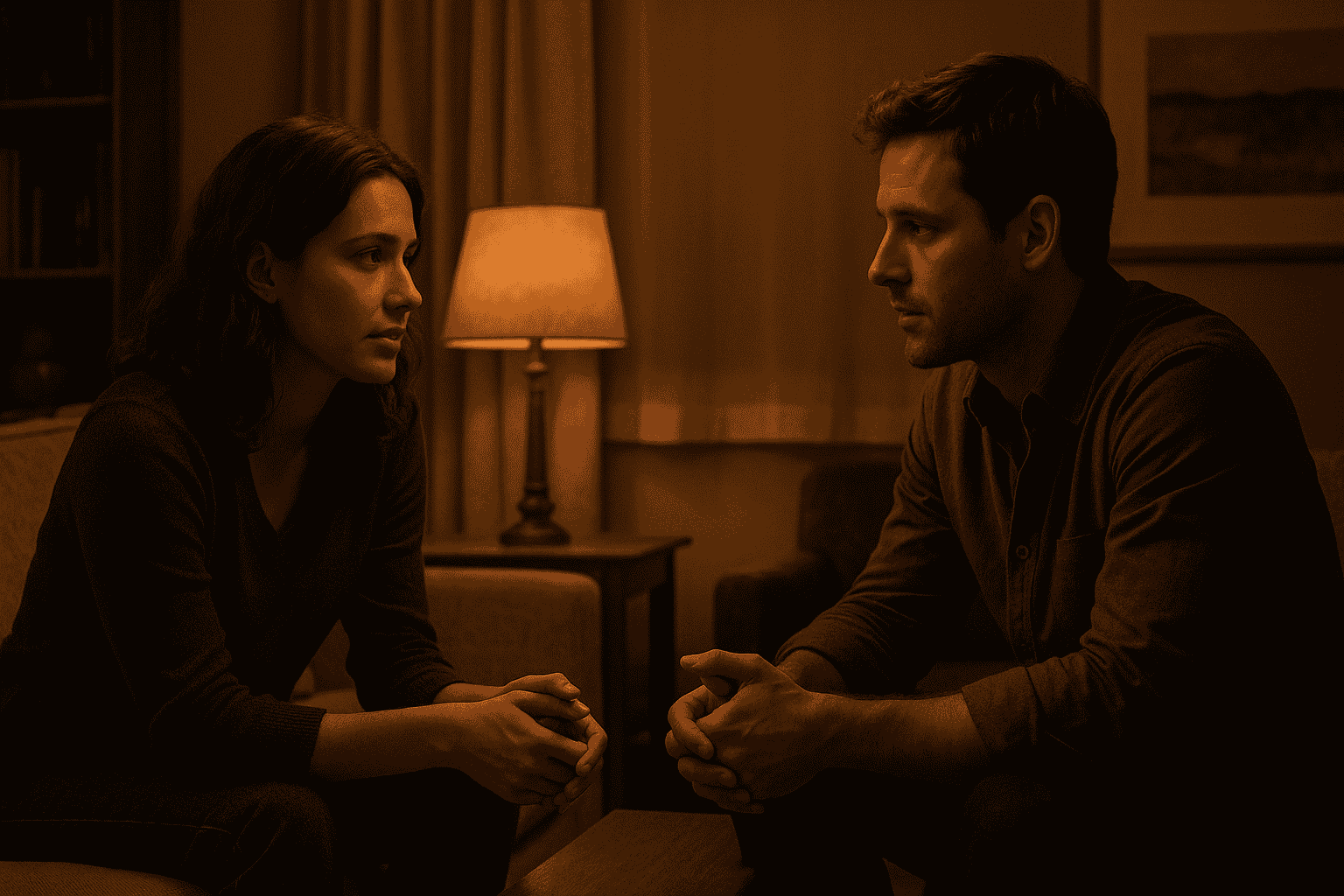
After years of friendship, one unexpected moment blurs the lines between friendship and something deeper.
8
More Than Just Friends
We’d been friends long enough to finish each other’s sentences and long enough to know where the other kept the spare charger, the stash of midnight snacks, the embarrassing playlist one never admitted to. Friendship, in our case, was an architecture built of small, steady bricks: shared jokes, bad movies, late-night study marathons, and the kind of favor exchanges that made the world feel less sharp.
Maya and I met on the first day of sophomore year, crammed into a cramped lecture hall with too many people and too much humidity. She sat two seats over, her notebook already a neat grid of tiny handwriting. When she lent me a pen without ceremony, I assumed she was merely polite. By the end of the week, we were a pair—practical, patient, and oddly permanent.
Years later, those practicalities became routine. I could sense her mood by the pattern of her texts: three-word messages meant she was tired; a single dot meant she needed to vent; a photo of her desk plant meant she wanted company. We had a shorthand that felt effortless—so effortless that sometimes I forgot how my chest tightened when she laughed in the way she did, low and unguarded, or the way her hair caught the sunlight and turned ordinary sidewalks into frames.
The evening it all shifted began like any other: rain, a too-long day, a plan to meet for dinner at the small Thai place that fried its spring rolls perfectly. The city smelled like wet tar and jasmine from a florist next door. Maya arrived late because she’d been stuck at work, carrying a tote bag that still had a library receipt poking out. She apologized the way she usually did—awkward and sincere—then shrugged and ordered noodles with the kind of focus she saved for things she liked.
We talked about nothing important first. Our conversation orbited around office gossip, a new show, a neighbor’s cat that refused to be ignored. Between bites, she told me about a promotion she’d been offered and hesitated when she mentioned the word “relocate.” The pause was tiny, a quiet gap, but it landed in my chest like a pebble and caused ripples.
“Would you go?” I asked, testing the water.
Maya looked down at her chopsticks, then laughed softly. “Would you come with me?”
The question wasn’t flirtatious; it was practical, the sort of thing friends asked. But the way she said it—casual and curious—made my throat constrict. I realized I had images crowded in my head I hadn’t let myself acknowledge: a life where our routines folded into new cities, different courtyards, unfamiliar grocery stores. A life where the small comforts we shared became shared places.
“Maybe,” I said, too quickly. “Maybe I’d try.”
Her eyes lingered on mine longer than usual. “You never tell me anything straightforward,” she said, and there it was—the teasing that always softened more serious things. But steady under the teasing was question, and that unspooled a thread I’d avoided pulling at for months.
After dinner we wandered, the rain having softened into a mist that made the streetlights look like stars too close to touch. We passed a bookshop with sun-faded covers in the window. Maya stopped without explanation and pulled an old poetry collection from the display. The pages smelled like glue and dust and a summer that belonged to someone else.
“You always loved poems,” I said, remembering her scribbled annotations from college.
She thumbed a dog-eared page and smiled. “I did. I still do. Some lines feel like someone else reached inside you and arranged things more honestly.”
We found a bench under the awning of a closed florist and sat. The city hummed around us—the soft staccato of tires, the distant scrape of a subway, laughter slinking out from a bar. It felt ordinary and enormous all at once.
“Do you ever think about how different things could be?” Maya asked, voice small.
“All the time,” I admitted. “But mostly as a thought, not a plan.”
“Me too.”
Her hand found mine. It wasn’t dramatic. It fell naturally, palm to palm, like two pieces of the same puzzle settling into place. A warmth spread from that touch—gentle, certain. I wasn’t surprised that it felt right; I was surprised by how much I had been pretending it wasn’t there.
“Why did we never say anything?” I asked, the question curving out of me before I could box it up and file it away as hypothetical.
Maya hesitated, then let out a breath that sounded like relief and fear wrapped in one. “I think we were both scared of losing the thing we had,” she said. “Sometimes people don’t risk the nearest good thing because they’re afraid to wreck it.”
The honesty in her voice felt like an offering. I thought about all the nights we’d spent on that same bench talking about futures and fears, about how easy it had been to be honest without consequence. Suddenly the hypothetical had a color and a temperature. Suddenly it mattered.
“It could change everything,” I said.
“It could,” she agreed. “Or it could make everything better.”
There’s a quiet that falls right before someone moves closer—an awareness, a stilling, like the world holding its breath. When Maya leaned her head on my shoulder, it felt like home. It wasn’t dramatic or cinematic, nothing urgent or desperate. It was simple and not-entirely-planned, the kind of gentle gravity that real relationships sometimes have when two people finally notice the orbit they’ve been in.
We didn’t outline a future in that moment. We didn’t plan relocation logistics or job negotiations. We held hands and, eventually, we let conversation return to safer ground—favorite songs, the ridiculousness of our old professors, the clarity of the night sky. But everything had shifted. The silence between sentences carried new weight; a brush of fingers was noticed and cataloged. There was a progression in small intimacies—an exchange of jackets when one of us shivered, the choice of whose apartment to crash at during thunder, the nonchalant choice of sharing headphones.
Over the next few weeks, we lived in the liminal space between friendship and something more: familiar and thrilling, comfortable and new. Our routines stayed the same—the coffee place where the barista remembered our orders, the corner table at the library—but tiny decisions began to reflect our changed priorities. We moved through the city with a shared map in our pockets, navigating conversations with a care that felt reverent.
There were moments of clumsiness—an accidental confession of jealousy when one of us mentioned dating someone else, an awkward pause when someone used the word “boyfriend” in conversation. But those moments were learning; not catastrophes. We learned how to be honest about needs and fears, how to be patient when one of us needed space, and how to hold the other without attempting to fix everything.
The day Maya received the official offer to relocate came with a late summer storm. We sat in my tiny kitchen, rain skittering down the window, the houseplants drinking in the humidity. The envelope sat on the counter like a test I hadn’t studied for. We’d rehearsed this conversation in fragments—practical plans, “what ifs,” travel logistics. None of it captured the small, private tug that had taken root.
“I want you to be happy,” I said, because it was the only honest beginning I could think of.
“I want you to be happy too,” she said. She took my hand, thumb tracing the familiar line across my palm. This time, our fingers were not tentative.
We listed options—cities, remote work possibilities, timing. Each idea bowed under the weight of real life, and yet none of it made the ache in my chest quieter. The practicalities were concrete; feelings were messier. But for every plan that felt tenuous, there was a steadying glance, a shared laugh, a memory of the bench under the florist’s awning.
In the end we did what friends who had grown into lovers do: we chose clarity over fear. We decided to try. Not because it was risk-free, but because the risk of never trying felt heavier than any practical complication. We made incomplete plans that felt honest rather than safe.
When the day came for her to tell her team, we walked down the corridor together, hands linked in a way that no longer needed justification. There were awkward congratulations and questions, but most of all, there was the quiet comfort of being both companion and confidant as life stretched and shifted.
Months later, when the apartment felt both ours and new, I would remember the small architecture of how it began—the pen lent in a lecture hall, the shared desk lamps, the nights on a bench listening to rain. Friendship had taught us how to be patient and attentive; love taught us how to convert those lessons into promises. We built something that fit the profile of both: reliable and alive, familiar and daring.
It didn’t solve everything. We still had doubts, bills, and the occasional late-night irritation. But when the world felt too sharp, we had each other to soften the edges. More than just friends, then—yes—but not less than what we had always been. We were something that respected the small bricks and welcomed the new rooms they built together.
You Might Also Like
6
Between Us, Only Silence Spoke
A moment of deep silence reveals more between two friends than words ever could.
FREE
4
The Night We Spoke Honestly
A couple in a struggling relationship finally has the heart-to-heart conversation they’ve been avoiding.
FREE
5
The Day She Chose Me
A long-time friend finally opens up about choosing him over everyone else in her life.
FREE
3
Almost Lovers
Two people who always felt a spark finally confront their unspoken connection during a long walk home.